
Manufactured homes are one of Arizona’s most popular and accessible paths to homeownership, especially in fast-growing areas outside Phoenix, Tucson, Yuma, and throughout northern and rural counties. One of the first questions Arizona buyers often ask is why a “single-wide home usually costs less than a double-wide”, even when both offer similar square footage.
The short answer: “Arizona’s transportation conditions, land preparation needs, construction standards, climate factors, and consumer preferences amplify the natural price differences between home types.” Understanding these differences helps Arizona buyers choose the best option for their budget, lot size, and long-term plans.
Single-Wide vs. Double-Wide: While prices vary by manufacturer and region, Arizona trends follow the national pattern. Single-wide homes cost less overall and less per square foot because double-wide homes have more construction complexity, transport requirements, foundation needs, and buyer demand, increasing they costs
Here’s the foundational comparison many Arizona buyers start with:
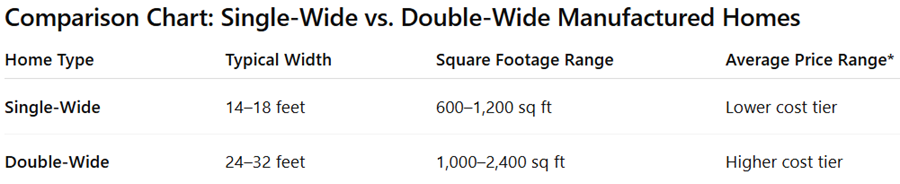
*Final pricing in Arizona varies widely based on location, transportation distance, customization, foundation type, and utility connection requirements. Why these cost differences are even more noticeable in Arizona is in the details. Below is the explanation of the principles, incorporating state geography, regulations, and housing trends.
1. Construction Complexity – Arizona Homes Face Extra Climate Demands.
Double-wides are built in two sections, requiring:
- Two chassis and floor systems
- Extra interior framing
- Reinforced marriage walls
- More finishing work
AND, in Arizona, the construction must stand up to:
- Extreme heat
- UV exposure
- Dust infiltration
- Monsoon moisture
Manufacturers often upgrade ventilation, roofing materials, insulation, and exterior durability for Arizona climates—costs that increase more on larger, double-wide models.
2. Transportation Costs Are Higher in Arizona’s Wide-Open, Rural Terrain and transport is one of the main reasons double-wides cost more, and Arizona’s geography magnifies this difference. However, this can be somewhat mitigated due to the fact that there are several home building facilities within the state.
Single-Wide Transport in Arizona
- One section = simpler routing across long desert highways
- Often only one pilot car
- Fewer permits and lower insurance
- Easier access to rural lots
Double-Wide Transport in Arizona
- Two oversized sections = more permits, more escorts
- Stricter timing due to heat and monsoon restrictions
- Higher fuel and insurance costs
- Greater difficulty navigating mountain regions (Prescott, Show Low, Flagstaff)
- Some remote lots require special routing or grading just to deliver the home
These additional logistical demands frequently make double-wide transport in Arizona significantly more expensive than in smaller or flatter states.
3. Foundation and Setup Costs Are Higher in Arizona – Arizona’s soil conditions – including expansive clay in parts of the state, rocky terrain in northern counties, and sandy desert soil elsewhere, often require:
- More piers and anchoring
- Deeper or reinforced foundation systems
- More complex leveling for multi-section homes
A double-wide’s larger footprint means:
- More anchor points
- More blocking
- More site prep and grading
Single-wides, being narrower and lighter, typically require simpler, less expensive foundation work.
4. Interior Layout and Design – Arizona Buyers Lean Toward Double-Wides Even when square footage is similar, Arizona buyers often prefer the roominess of double-wide floor plans, which offer:
- Large great rooms
- Wider kitchens and dining areas
- Larger primary suites
- More storage
- Additional windows
Arizona’s abundant sunshine and emphasis on natural light make double-wide layouts especially appealing, increasing demand—and price.
5. Arizona Consumer Demand Drives Higher Double-Wide Pricing. Arizona communities and buyers trend toward:
- More residential-style homes
- Open layouts suited for entertaining
- Multi-section homes on private acreage
- Site-built-like features
Because double-wides align better with these preferences, their demand, especially around Maricopa, Pinal, Mohave, and Yavapai counties, pushes prices upward.
Meanwhile, single-wides remain popular for:
- RV/resort communities
- Narrow rural lots
- Secondary or seasonal homes
- Budget-focused buyers
Demand positioning directly impacts how manufacturers and retailers price each home type in Arizona.
6. Utilities and Site Work Cost More for Double-Wides in Arizona. Arizona’s land is often undeveloped or semi-developed, requiring:
- Longer trenching for utilities
- Dust control during setup
- Custom grading
- Larger pads for double-wide footprints
A single-wide needs roughly half the pad size and much less trenching, lowering total site costs.
7. Land and Zoning Restrictions Across Arizona Affect Pricing. Arizona counties, cities, and HOAs may impose:
- Minimum width requirements (favoring double-wides)
- Maximum width restrictions (favoring single-wides on narrow lots)
- Setback regulations that demand larger parcels for double-wides
Many rural lots can easily accept single-wides but require major clearing or grading for double-wides. This difference affects the overall cost to place the home.
While both home types deliver strong value, the cost difference between single-wide and double-wide homes in Arizona comes from:
- Construction complexity
- Transportation challenges unique to the state
- Climate-driven material requirements
- More demanding site prep and foundation needs
- Market demand favoring multi-section homes
- Zoning and land realities
- Higher setup and finishing labor
Single-wides offer the “lowest cost of entry”, fast setup, and flexibility for tight or rural lots. Double-wides deliver “more residential feel”, larger rooms, and a closer match to Arizona’s lifestyle preferences, often with higher resale value.
Both meet different needs in Arizona’s fast-growing housing market.